Modern data centers process enormous amounts of information every second. As computing density continues to increase, so does the amount of heat generated by servers, networking equipment and storage infrastructure. Without effective cooling, excessive heat can reduce performance, shorten equipment lifespan and increase the risk of costly downtime.
For data center operators, cooling is no longer simply an operational necessity. It’s a critical component of infrastructure efficiency, reliability and long-term scalability.
In this guide, you’ll learn how data center cooling works, the differences between air-based and liquid-based cooling methods and why physical sealing and thermal management materials play an important role in maintaining cooling efficiency.
Why Data Center Cooling Matters
Every server, switch and processor inside a data center generates heat. As equipment temperatures rise, system performance can degrade, and components can experience accelerated wear.
Effective cooling helps:
- Maintain optimal operating temperatures
- Reduce the risk of equipment failure
- Improve system reliability
- Extend hardware lifespan
- Support higher computing densities
Cooling also represents one of the largest contributors to a facility’s energy consumption. Many organizations track cooling efficiency using Power Usage Effectiveness (PUE), a metric that compares total facility energy consumption to the energy used by IT equipment.
As computing demands continue to grow, improving cooling efficiency has become a major focus for data center operators seeking to reduce operating costs and improve sustainability.
How Does Data Center Cooling Work?
Data center cooling removes heat generated by IT equipment and transfers it outside the facility. No matter the cooling technology used, the objective remains the same:
- Deliver cool air or liquid to heat-generating equipment
- Absorb heat from servers and components
- Remove the heated air or liquid from the environment
- Reject the collected heat outside the data center
Most cooling strategies fall into two primary categories: air-based and liquid-based. Regardless of the approach, airflow management remains essential. Hot-aisle and cold-aisle containment systems help prevent hot exhaust air from mixing with cooled intake air, improving efficiency and reducing cooling loads.
Air-Based Cooling
Air cooling remains the most widely deployed cooling method in data centers today. Traditional air-cooled facilities typically rely on Computer Room Air Conditioners (CRACs) or Computer Room Air Handlers (CRAHs).
CRAC systems use refrigerant-based cooling to condition air before distributing it throughout the data center. CRAH systems use chilled water supplied by a central cooling plant to achieve similar results.
Cooled air is distributed using one of two common approaches:
- Raised floor systems that deliver cool air through perforated floor tiles
- Overhead distribution systems that direct conditioned air through ducts and containment structures
Air cooling has proven effective for decades, particularly in lower-density environments. However, as processor power increases and AI workloads become more demanding, air cooling alone can struggle to manage the heat generated by modern high-density racks.
This challenge has accelerated interest in liquid cooling technologies.
What is Liquid Cooling?
Liquid cooling uses a liquid medium rather than air to transfer heat away from electronic components. Because liquids have significantly higher thermal conductivity than air, they can remove heat much more efficiently and support substantially higher computing densities.
Common liquid cooling approaches include:
- Rear-Door Heat Exchangers that are installed on the back of server racks. As hot exhaust air leaves the rack, it passes through a water-cooled heat exchanger that removes heat before the air re-enters the data center environment.
- Direct Liquid Cooling (DLC) that delivers coolant directly to cold plates attached to high-heat components such as CPUs and GPUs. The coolant absorbs heat at the source before carrying it away for rejection elsewhere in the cooling system.
- Immersion Cooling, which submerges servers in a specially engineered dielectric fluid that removes heat directly from electronic components.
As AI, machine learning and high-performance computing workloads continue to increase, liquid cooling solutions are becoming an increasingly attractive option for data center operators.
Learn more about our Sur-Cool thermal interface materials: http://sur-seal.com/products/sur-cool/
Immersion Cooling
Immersion cooling is one of the most efficient cooling methods currently available. There are two primary types:
- Single-Phase Immersion Cooling: a single-phase system in which the dielectric fluid remains in liquid form throughout the cooling process. Heat is absorbed by the fluid and removed through external heat exchangers.
- Two-Phase Immersion Cooling: a two-phase system where the dielectric fluid boils when it absorbs heat from electronic components. The vapor rises, condenses on cooling surfaces and returns to liquid form, creating a continuous cooling cycle.
Immersion cooling is particularly well-suited for:
- Artificial intelligence workloads
- High-performance computing (HPC)
- Cryptocurrency mining
- Edge computing deployments
- Ultra-high-density data centers
While highly effective, immersion cooling often requires significant infrastructure modifications and higher upfront investment compared to traditional air-cooling systems.
Free Cooling and Economization
Many modern facilities improve cooling efficiency through free cooling strategies. Free cooling uses naturally cooler outdoor air or water temperatures to reduce reliance on mechanical cooling equipment.
Two common approaches include:
- Air-Side Economizers: introduce filtered outside air into the facility when environmental conditions are suitable, reducing the need for mechanical refrigeration.
- Water-Side Economizers: use cool outdoor temperatures to assist chilled water systems, lowering energy consumption while maintaining desired operating temperatures.
These strategies can significantly improve energy efficiency, reduce operating costs and lower overall PUE.
The Role of Sealing in Data Center Cooling Efficiency
Even the most advanced cooling system can underperform if airflow is not properly managed. Effective sealing and containment solutions help prevent hot air recirculation, maintain pressure differentials and ensure cooled air reaches the equipment that needs it most. Sur-Seal’s sealing and containment solutions support thermal management strategies by helping maintain containment integrity throughout the data center.
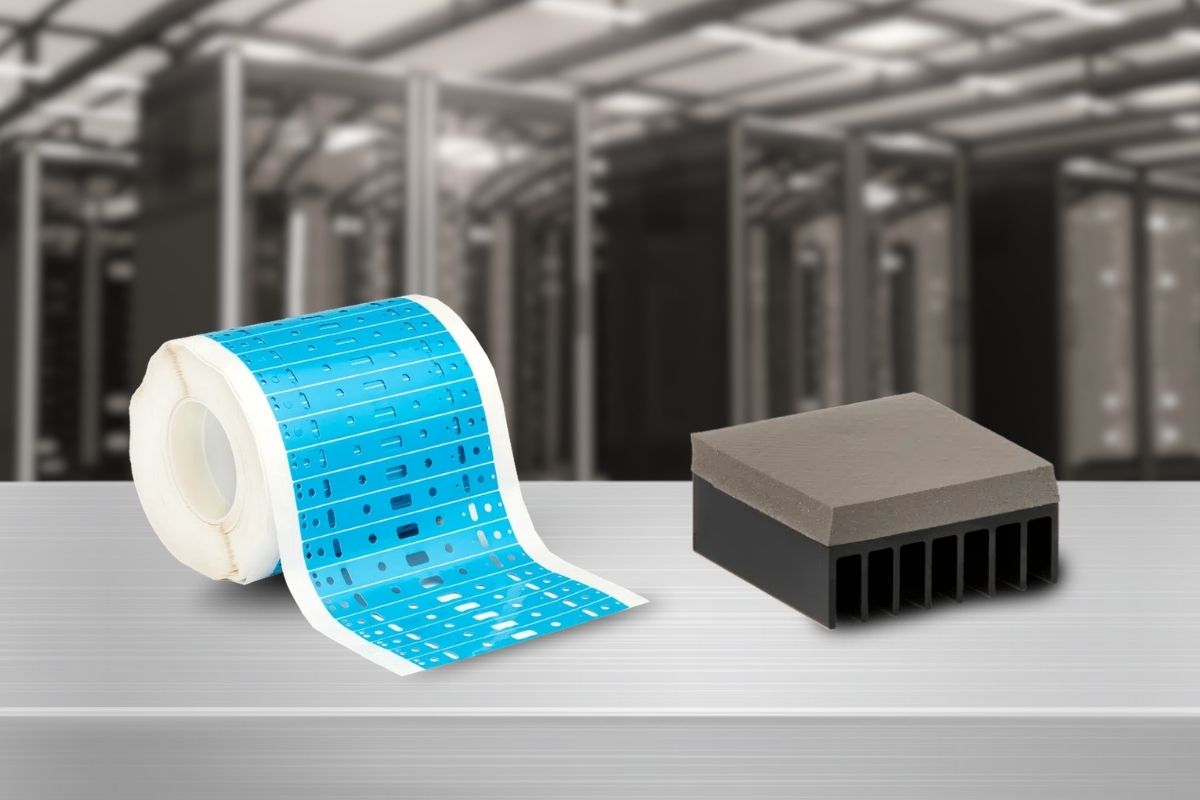
Thermal interface materials also play a critical role in cooling performance. These materials improve heat transfer between electronic components and heat sinks by filling microscopic air gaps that can reduce thermal conductivity.
Examples include:
Or for extreme thermal environments, graphite-based solutions can help distribute heat more effectively across critical components, like:
These materials are commonly used across advanced electronics and data center applications where thermal performance directly impacts reliability and efficiency.
Optimize Your Data Center Cooling with Sur-Seal
Whether you’re operating a traditional air-cooled facility or evaluating next-generation liquid cooling technologies, cooling performance depends on more than the cooling equipment itself.
Airflow containment, sealing integrity and thermal interface materials all play a critical role in ensuring heat is transferred efficiently and managed effectively throughout the system.
Sur-Seal specializes in thermal management and sealing solutions that help support data center reliability, efficiency and long-term performance. From thermal interface materials and graphite heat spreaders to sealing and containment solutions, our team works with customers to solve complex thermal challenges in demanding environments.
If you’re looking to improve cooling performance, optimize thermal management or support higher-density deployments, request a quote to discuss your application with our team or learn more about our thermal management services.
 Kent Manufacturing is now integrated with Sur-Seal