Waterjet cutting is a precision manufacturing process that uses a high-pressure stream of water, sometimes combined with abrasive particles, to cut through a wide range of materials. Unlike laser or plasma cutting, waterjet cutting does not generate heat, making it ideal for materials that are sensitive to thermal distortion.
Engineers and OEMS rely on waterjet cutting when tight tolerances, clean edges, and material integrity are critical. As industries such as the aerospace, automotive, medical manufacturing and industrial equipment evolve, waterjet technology has become a preferred alternative to heat-based cutting processes.
Because it avoids a heat-affected zone, waterjet cutting preserves material properties. This is essential when working with rubber, foam, composites and layered substrates.
How Does Waterjet Cutting Work?
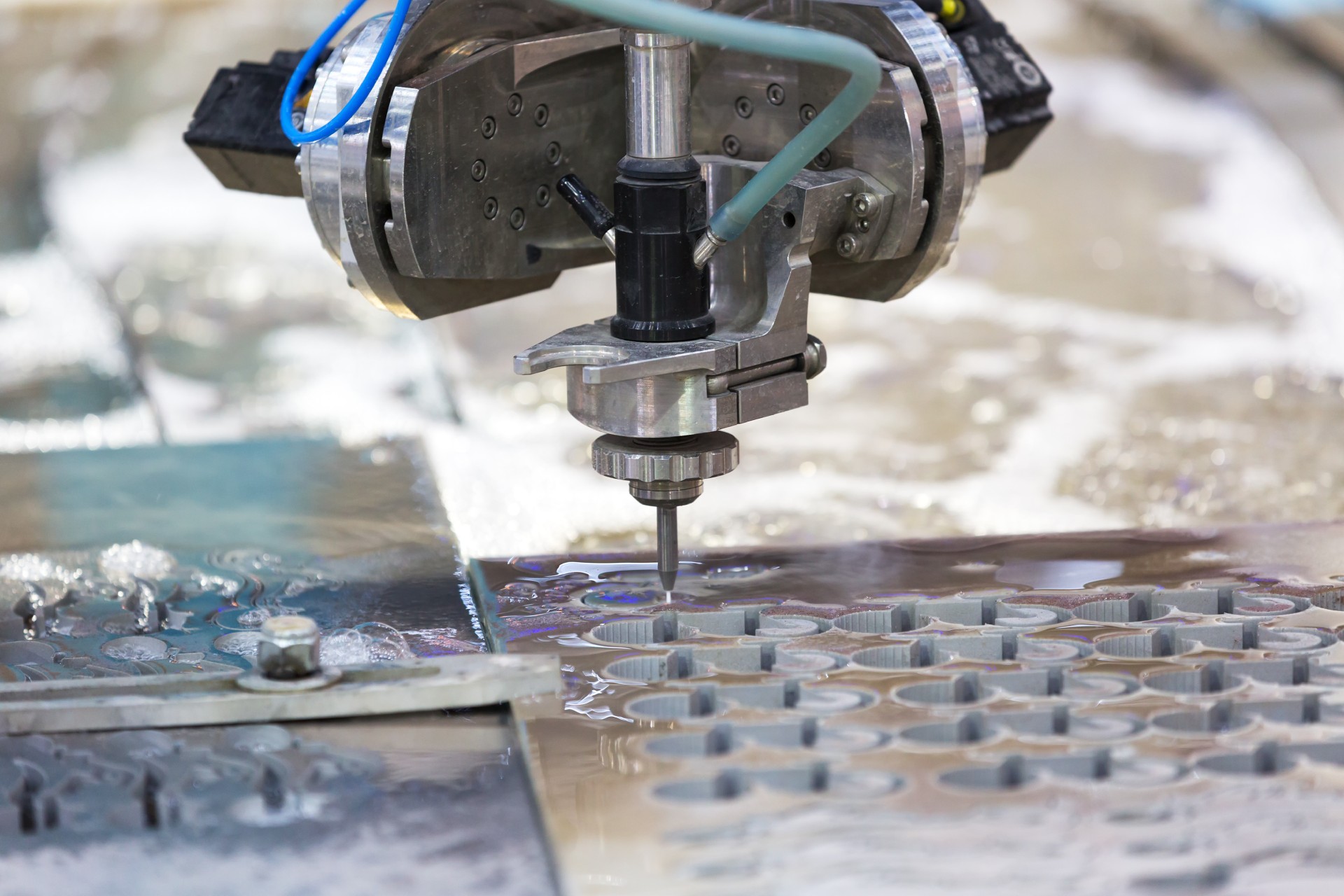
At its core, waterjet cutting works by forcing water through a narrow nozzle at extremely high pressure, often exceeding 50,000 PSI. When needed, abrasive particles such as garnet are introduced to enable the cutting of harder materials.
The waterjet cutting process includes:
- Water Pressurization – Water is pressurized using an intensifier pump
- Abrasive Injection, if required – Garnet abrasive is mixed with the water stream for cutting harder materials
- High-Velocity Cutting Stream – The mixture exits through a precision nozzle
- CNC-Controlled Movement – Computer numerical control systems guide the cutting head for exact shapes and repeatable accuracy
The result is an extremely precise cut with minimal material stress. To learn more about Sur-Seal’s capabilities, visit: https://www.sur-seal.com/services/water-jet-cutting/
Pure Waterjet vs. Abrasive Waterjet
Waterjet systems generally fall into two categories: pure waterjet and abrasive waterjet. Pure waterjet is primarily used for softer materials such as rubber, plastics, textiles and foam. It’s a clean process with lower operational cost and no abrasive disposal.
Conversely, abrasive waterjet is typically used for harder materials like metals, glass, ceramics, and stone. It offers greater versatility, as it can cut both thick or dense materials and maintains precision on rigid substrates.
Sur-Seal offers both methods depending on project requirements, material type and production volume.
What Materials Can Waterjets Cut?
Waterjet cutting can process a wide range of materials, including:
Because the process is cold-cutting, it does not alter chemical composition, melt edges or degrade layered materials. This makes it ideal for sensitive materials used in aerospace, automotive, medical and industrial manufacturing applications.
How Thick Can a Waterjet Cut?
Waterjet thickness capability depends on material type and desired precision.
- Soft materials such as foam and rubber can exceed 6 inches
- Metals are typically cut at 1 to 2 inches for high-precision applications
- Dense materials such as stone and composites vary based on abrasive use
As material thickness increases, cutting speed decreases. Engineers must balance precision requirements, tolerance needs and production timelines when determining thickness specifications.
The Benefits of Waterjet Cutting
Waterjet cutting offers several advantages for engineers and manufacturers designing high-performance components:
No Heat-Affected Zone
Because waterjet cutting does not generate heat, materials retain their structural integrity. There is no warping, hardening or microfracturing, which is critical for precision parts.
High Precision and Repeatability
CNC-controlled systems allow for tight tolerances and consistent results across production runs. Complex geometries can be achieved without secondary finishing.
Minimal Material Waste
The narrow cutting stream reduces kerf width and material waste, supporting cost control and sustainability initiatives.
Limitations and Considerations
While waterjet cutting is versatile, it may not be ideal for every application. It is slower than laser cutting for thin metals and requires both wet cutting environment management and abrasive disposal.
At Sur-Seal, we guide clients through process selection based on application needs, material properties, tolerances and budget constraints.
Choose Sur-Seal’s Waterjet Cutting Services
Sur-Seal provides in-house waterjet cutting capabilities designed for precision, speed and material versatility. Our team supports complex geometries, tight tolerances and a broad material range from foam and rubber to engineered composites and metals.
Explore our waterjet cutting services or contact an expert for additional support.
 Kent Manufacturing is now integrated with Sur-Seal